Skip to content

Spacecraft & vehicles

Spacecraft & Vehicles

The Restless Verdict. The Night Sun. Scouts that respond instead of obeying.

The Restless Verdict

The Restless Verdict

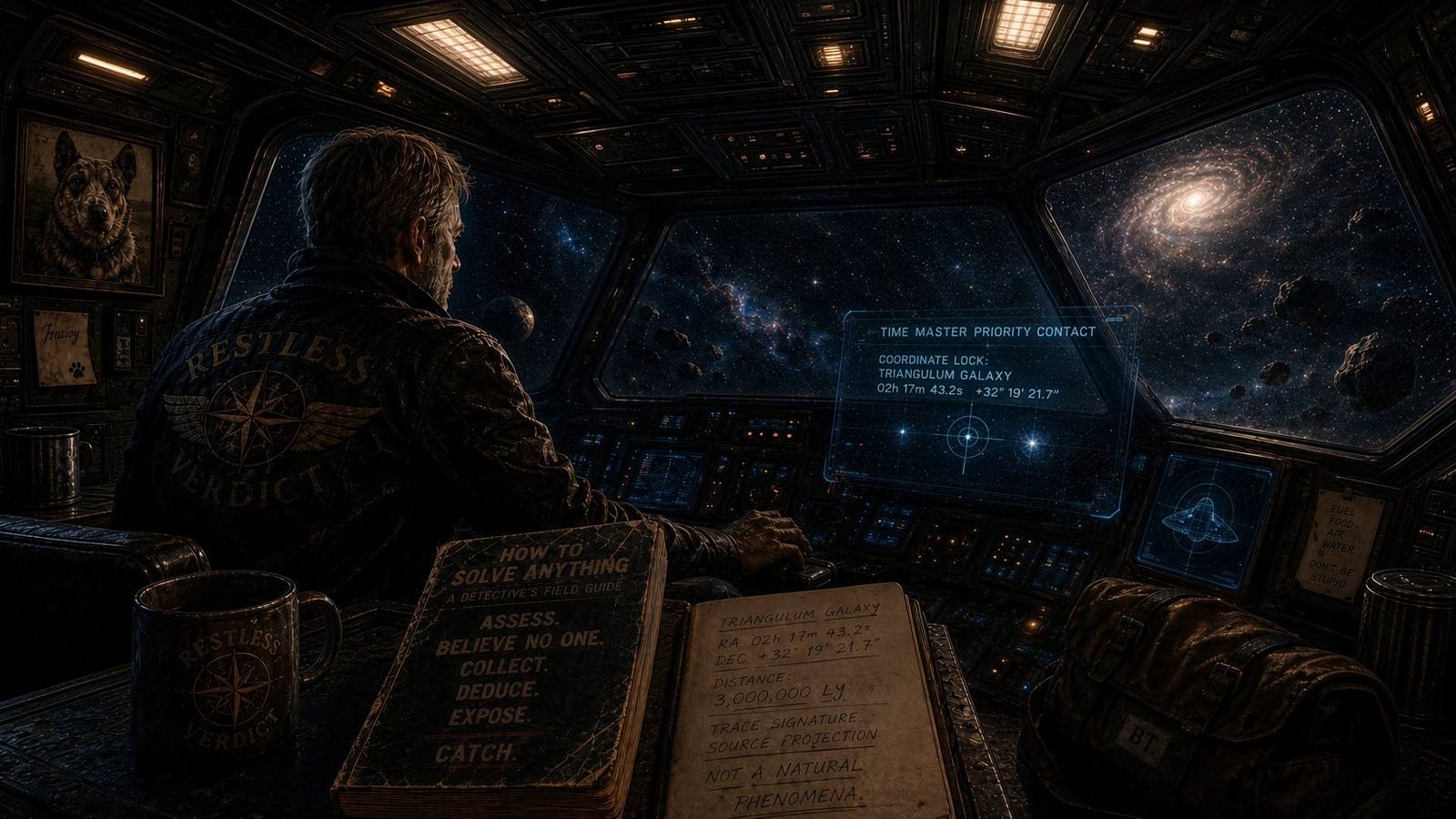
Billy Thinx's ship runs a hundred and forty feet from bow to stern — eleven rooms wrapped around a spine of corridor, her cockpit glass still wearing the old scars he never bothered to buff out. After Sydney, she feels one size too large. The galley goes unused because he doesn't cook anymore; the cargo bay sits empty because he stopped filling it; and a shelf at knee height still marks the place where her water bowl stood. In Book Seven, the old proximity sensor chirps at nothing — until a Time Master hail finds the glass, and for the first time in eight months the Verdict feels exactly the size she was built to be. She was never a warship. She is a detective's office that learned to fly.

The Antarctic craft

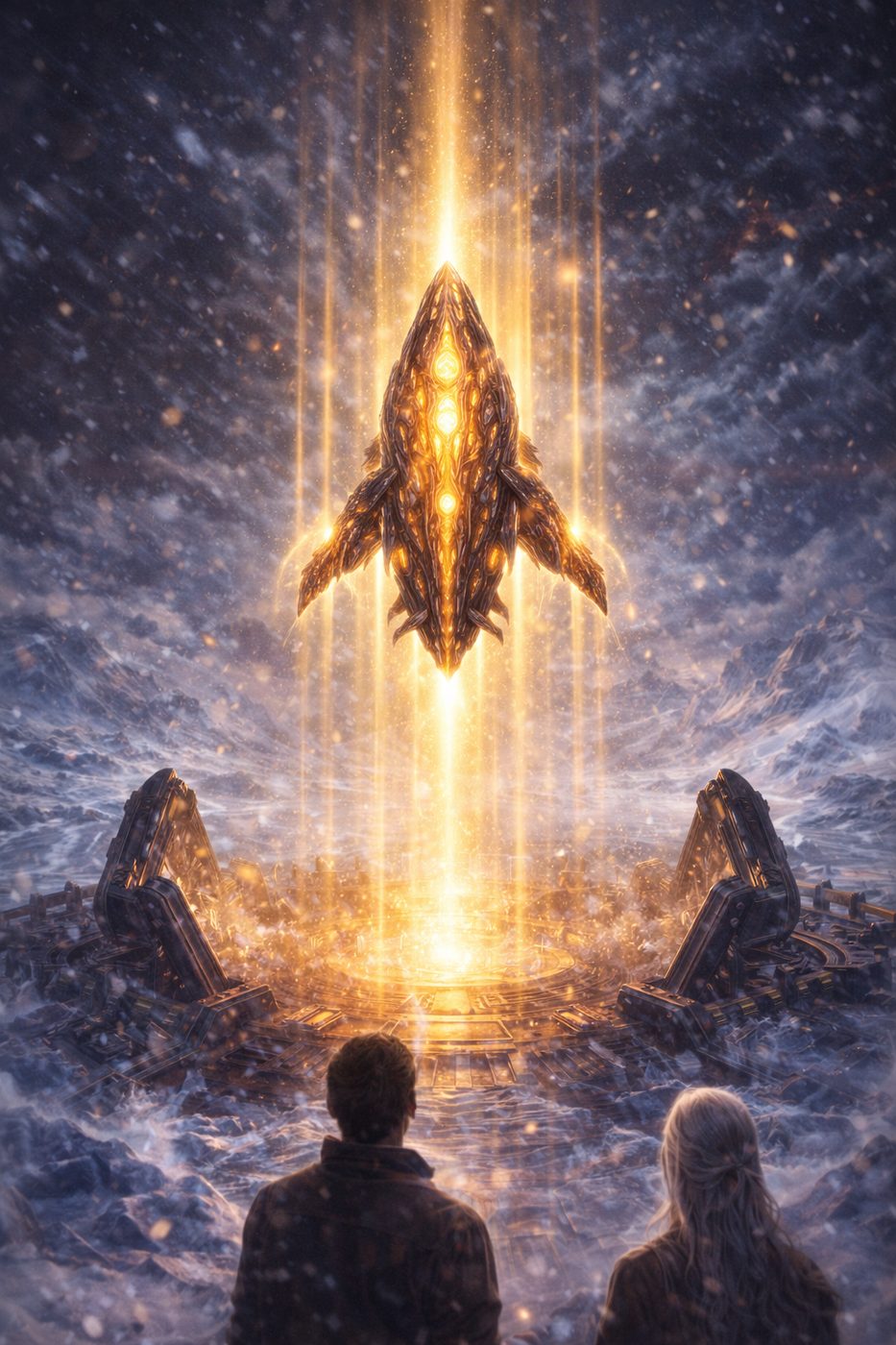
The Antarctic craft

Bell-geometry under a winter sky. What the Reich called Die Glocke did not stay a rumor under the ice. In Book Two it lifts off black water as a working craft — stolen science wrapped around something that was never theirs to command.

Nachtsonne — the Night Sun

Nachtsonne — the Night Sun

Nachtsonne — the Night Sun. Every archive in the Fourth Shadow, every preservation network, every continuity system traces back to the same designation, and none of them point to a station. They point to a ship — massive, ancient, and already moving. The Antarctic complex was only ever a relay. Mars was only ever a backup. The Night Sun has been leaving for decades.

Pleiadian scout

Pleiadian scout

The Pleiadian scout carries no designation, and it never will. It does not obey — it responds. Thought-initiated, emotion-amplified, resonance-aligned, its cabin surfaces shift to match whoever is aboard. Navigation works by desire-vectoring: the ship aligns itself to the intent of its pilot, and it makes no distinction between a human's intent and a dog's. In Book Five, the Codex harmonizes with the scout's neural pathways so that an entire fleet can travel the Thread as one song. In Book Six, the same runner — still unnamed, still scarred from the Ember Path — turns toward Earth on its own, because Sydney is already listening. It was never a machine. It is a companion.

Pleiadian mothership — shipboard AI

Pleiadian mothership — shipboard AI

Not a computer in a bulkhead. A mind. Blue skin of starlight, a globe of memory at the sternum, filaments that listen the way a nerve listens. The mothership does not run on code. It runs on presence. When Billy is carried from the cave to the medi-chamber, this is who meets him in the dark between stars — not a voice from a speaker. A being who already knew his name.

Galaxy runner — Ember Path

Galaxy runner — Ember Path

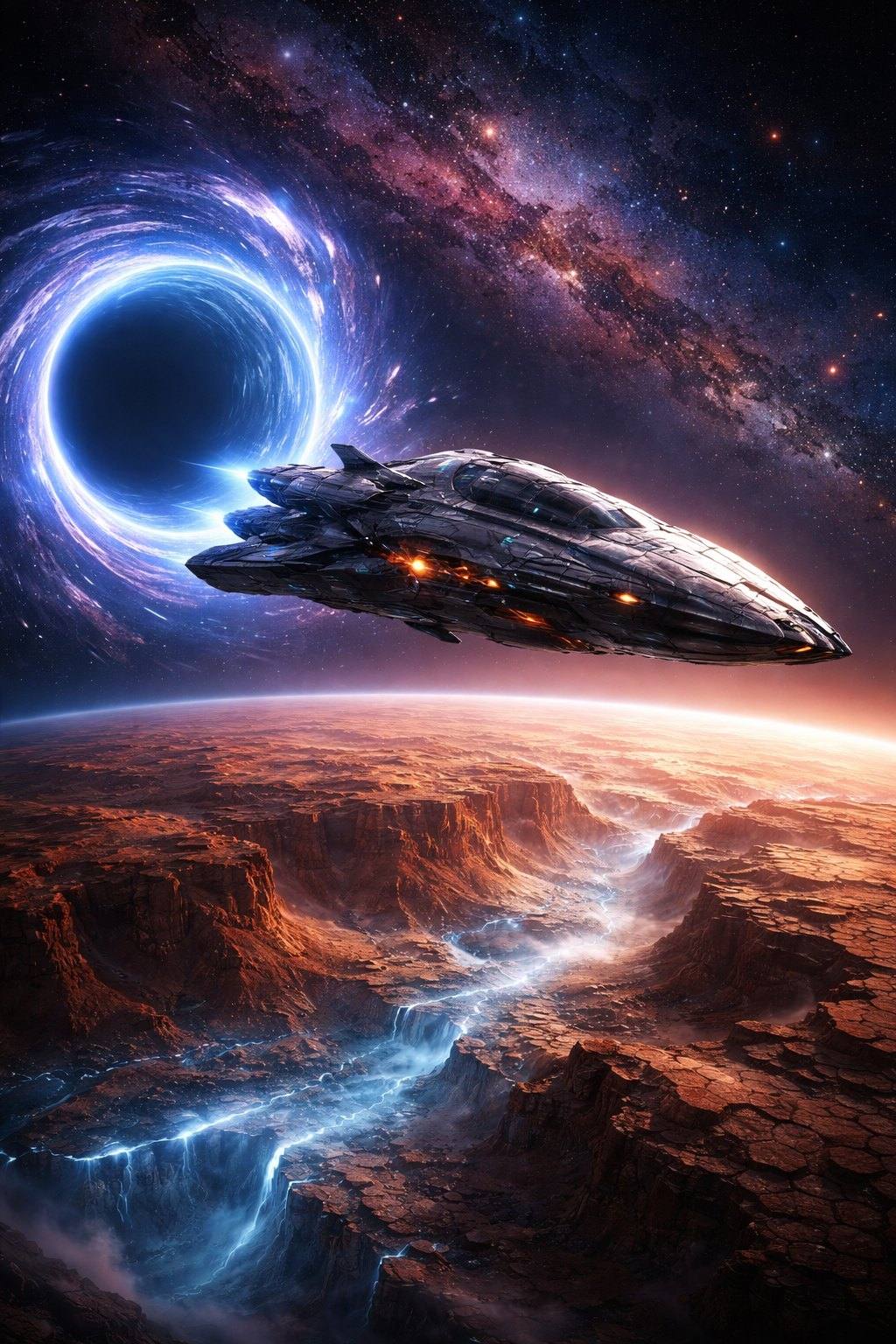
The galaxy runner is sleek, fast, and built for the long haul — not a battle cruiser, but a vessel designed to punch through the quantum fabric of space like a cheetah across a dream. The evidence of its journeys is written on its body: light-burn fractures along the fins, heat trails that still shimmer hours after arrival. In the prologue of Book Six it hangs motionless over a red canyon world, a wormhole cooling behind it. Its trajectory is Earth. Its mission is unknown.

Shadow interceptors

Shadow interceptors

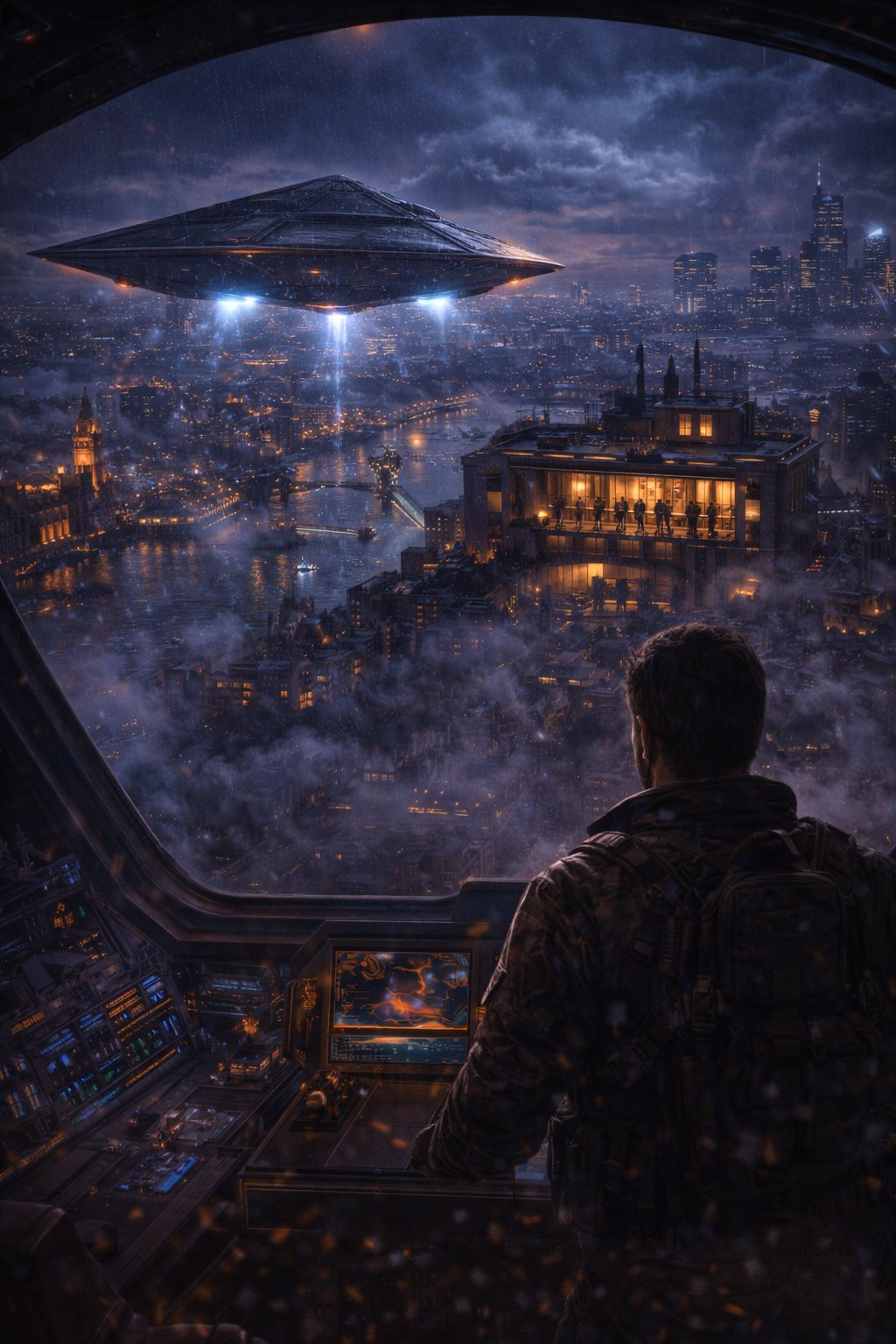
The shadow interceptors are black, quiet, and wrong in the corners of the eye. They are machines — hunter craft, not a crew. The Fourth Shadow's craft do not announce their arrival — they subtract it, unhappening from sensor logs and witness memory alike. Where they pass, charts forget the road.